
The year 2026 is shaping up to be a pivotal one for warehousing. Several forces are pushing the industry forward. These forces include new technology, changing customer expectations, and global challenges.
Warehouses are no longer just storage spaces. They are becoming dynamic hubs of data, automation, and sustainability. In this article, we look at key trends that will define the industry in 2026 and beyond.
Trend 1: AI and Intelligent Automation
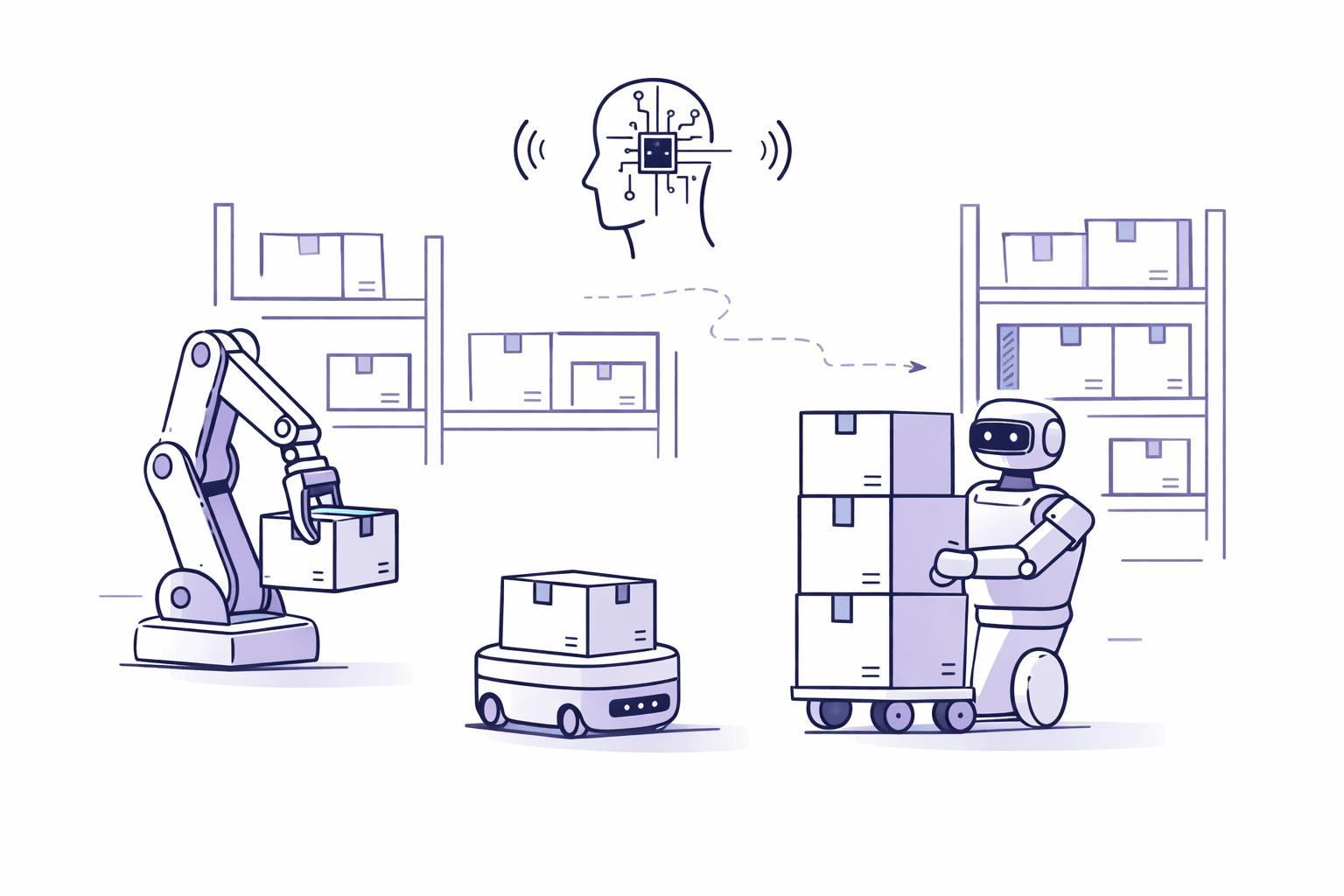
Artificial intelligence (AI) is now central to warehousing operations. What began with basic data analysis has evolved into real-time decision support. AI is optimizing inventory, forecasting demand, and directing task sequences on the warehouse floor.
Automation will keep growing in 2026, but not as pure robotics alone. It is about collaboration. Robots and AI systems will work with humans to boost accuracy and speed. Autonomous mobile robots (AMRs) will become more common and handle routine physical tasks reliably.
This trend helps warehouses address labor challenges. It reduces manual errors and improves throughput. But it also changes job roles. Workers will shift toward supervision, maintenance, and analytics tasks.
Trend 2: Real-Time Visibility and Software Orchestration
Visibility is now a core requirement. Warehouses must see what is happening at every stage of their operations. Real-time visibility enables faster response to changes in demand or supply disruptions.
Advanced software systems will play a bigger role than ever. Instead of only tracking data, they will orchestrate work across people, machines, and robots. This means assigning tasks, rerouting jobs around delays, and balancing workloads on the fly.
The shift from static reporting to live operational intelligence will help teams make better decisions. This makes warehouses more agile and resilient in the face of uncertainty.
Trend 3: Sustainability and Green Operations
Sustainability is no longer optional. Warehouses are under pressure to reduce energy use and cut emissions. Many facilities will adopt renewable energy, efficient lighting, and low-emission automation systems.
Predictive maintenance using AI and IoT sensors is becoming more common. These systems monitor equipment health in real time and can reduce breakdowns significantly. They improve uptime and reduce waste at the same time.
Customers and brands are also demanding greener operations. This is pushing warehouse owners to rethink layouts and infrastructure for better energy performance.
Trend 4: Micro-Fulfillment and Local Networks
Fast delivery is now a competitive edge. Urban centers will see more small, agile fulfillment hubs designed to serve local demand quickly.
These micro-fulfillment centers reduce last-mile costs and support quicker delivery windows. They also help companies respond to fluctuations in demand without major changes to large central facilities.
This trend will be important for retailers and 3PLs alike. It brings warehousing closer to customers and shortens delivery times.
Trend 5: Supply Chain Resilience
2026 will continue to test supply chains with economic volatility and external disruptions. Warehouses that can respond quickly to changes will have an advantage.
Resilient operations include risk mapping, scenario planning, and redundant capacity. These practices help warehouses handle unexpected events while maintaining service levels. Forecasting tools driven by data will be essential in building this resilience.
Trend 6: Workforce Evolution and Skills Shift
As technology grows, so do expectations for worker skills. AI, IoT, and automated systems require new knowledge. Warehouses will invest more in training and upskilling to fill these gaps.
Human work will evolve. Roles focused on routine tasks will decline. Roles in system supervision, data interpretation, and technical support will grow.
This shift helps workers stay relevant as the industry changes around them.
The warehousing landscape in 2026 is dynamic and fast-moving. Businesses that adopt the right technologies and strategies will be better positioned to stay competitive, serve customers, and operate sustainably.