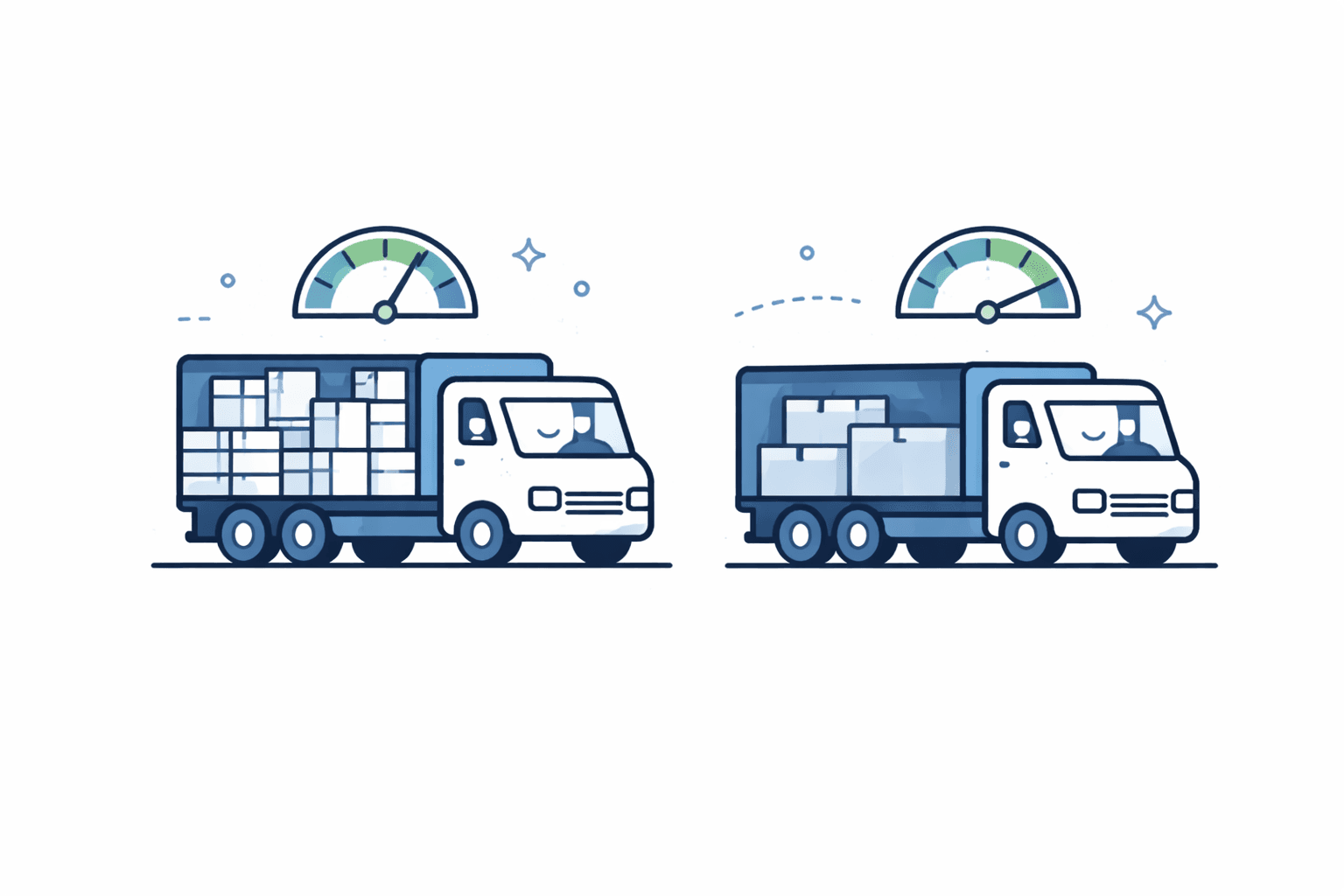

In warehousing and logistics, not every shipment moves in the same way. Some shipments are large enough to fill an entire truck. Others are much smaller and only need part of the trailer. This is where the difference between FTL and LTL becomes important.
This article explains what FTL and LTL mean, why they are used, how they differ, and the common situations where each option is used in warehouse and logistics operations.
What Is FTL?
FTL stands for Full Truckload.
FTL means one shipment uses most or all of a truck trailer. In this model, the truck is usually dedicated to a single shipper's load.
In simple terms, FTL is used when a shipment is large enough, heavy enough, or important enough to justify using a full truck.
FTL shipments often move directly from the pickup location to the delivery location with fewer stops and less handling.
What Is LTL?
LTL stands for Less Than Truckload.
LTL means a shipment does not need a full trailer. Instead, the shipment shares truck space with freight from other shippers.
In simple terms, LTL is used when a shipment is too small to fill a full truck, so the cost of transportation is shared across multiple shipments.
Because several shipments move together in one network, LTL freight usually involves more terminals, transfers, and handling points than FTL.
Why Are FTL and LTL Used?
Both FTL and LTL are common freight options in logistics. They exist because businesses ship freight in different sizes and with different delivery needs.
Why FTL Is Used
FTL is commonly used when businesses need:
- Large shipment capacity
- Faster transit
- Less freight handling
- Lower risk of damage
- More direct transportation
Why LTL Is Used
LTL is commonly used when businesses need:
- A lower-cost option for smaller shipments
- More flexibility for medium or partial loads
- Frequent shipping without waiting to build a full truckload
- Access to a shared freight network
Both options help businesses match transportation cost and service level to the actual size and urgency of the shipment.
The Difference Between FTL and LTL
FTL and LTL both move freight by truck, but they work in different ways.
1. Shipment Size
The biggest difference is shipment size.
- FTL is used for large shipments that take up most or all of the truck.
- LTL is used for smaller shipments that only take up part of the trailer.
2. Trailer Usage
- In FTL, one shipper usually uses the full truck.
- In LTL, multiple shippers share the same trailer.
3. Cost Structure
- FTL usually has a higher total shipment cost, but it may be more cost-effective for large loads.
- LTL usually has a lower upfront cost for smaller shipments because the cost is shared.
4. Transit Time
- FTL is often faster because the truck usually moves more directly to the destination.
- LTL can take longer because the freight may pass through terminals and consolidation points.
5. Freight Handling
- FTL usually involves less handling.
- LTL usually involves more loading, unloading, and transfer activity.
6. Risk of Damage
- FTL often has a lower risk of damage because the freight is handled fewer times.
- LTL may have a higher risk because the shipment moves through a shared network.
Common Scenarios for Using FTL
FTL is often the better choice in the following situations.
Large Volume Shipments
If a warehouse ships enough pallets or cartons to fill most of a trailer, FTL is usually more suitable.
Time-Sensitive Freight
When a shipment needs faster or more direct delivery, FTL is often preferred.
High-Value or Fragile Goods
If a shipment is sensitive, fragile, or high in value, businesses may choose FTL to reduce handling.
Dedicated Store Replenishment
Retailers and distribution networks often use FTL for large store replenishment shipments.
Regular Plant-to-Warehouse or Warehouse-to-Warehouse Moves
When there are steady, high-volume freight lanes, FTL is often used for efficiency and consistency.
Common Scenarios for Using LTL
LTL is often the better choice in the following situations.
Small or Medium Freight Shipments
If a shipment is too large for parcel shipping but too small for a full truck, LTL is often the right option.
Lower Shipping Budget
When cost control is important and transit time is less urgent, LTL can be a practical choice.
Frequent Partial Shipments
Some businesses ship smaller amounts more frequently instead of waiting to build a full truckload. LTL supports this model.
Multi-Customer Distribution
Warehouses may use LTL when sending smaller shipments to many different customers or locations.
Spare Parts and Replenishment Orders
Smaller restocking shipments often move through LTL networks.
How FTL and LTL Matter for Warehouse Operations
For warehouse teams, choosing between FTL and LTL affects several parts of the operation.
It can influence:
- Dock scheduling
- Freight planning
- Shipment consolidation
- Packaging requirements
- Carrier selection
- Transportation cost
A warehouse management or shipping system may also apply different workflows depending on whether the shipment is FTL or LTL.
For example:
- FTL shipments may require full-load planning and direct appointment scheduling.
- LTL shipments may require freight class details, pallet counts, and shared carrier coordination.
Final Thoughts
FTL and LTL are both essential freight models in logistics. Neither one is always better than the other. The right choice depends on shipment size, urgency, handling needs, and cost.
In simple terms:
- Choose FTL when the shipment is large, time-sensitive, or needs a more direct move.
- Choose LTL when the shipment is smaller and cost efficiency matters more than direct transit.
For warehouses, shippers, and logistics teams, understanding the difference between FTL and LTL helps improve freight planning and supports better shipping decisions.